How English Becomes Part of Everyday Life
One of the most common questions parents ask when considering an international school is how children actually learn English. While many people imagine language learning as memorizing vocabulary or completing worksheets, young children acquire language very differently. At Four Leaves International School Tokyo, English is introduced as part of everyday life, allowing children to experience the language naturally through daily routines, conversations and meaningful interactions.
Language with a Clear Purpose
Young children learn language most effectively when words have a clear purpose. Instead of introducing vocabulary in isolation, English becomes connected to familiar experiences throughout the day. Greeting teachers in the morning, listening to instructions, asking for help, participating in classroom discussions and using everyday expressions such as “please” and “thank you” all provide opportunities to hear and use English in meaningful contexts. Because these situations happen repeatedly, children gradually begin understanding not only individual words but also how they are naturally used in conversation.
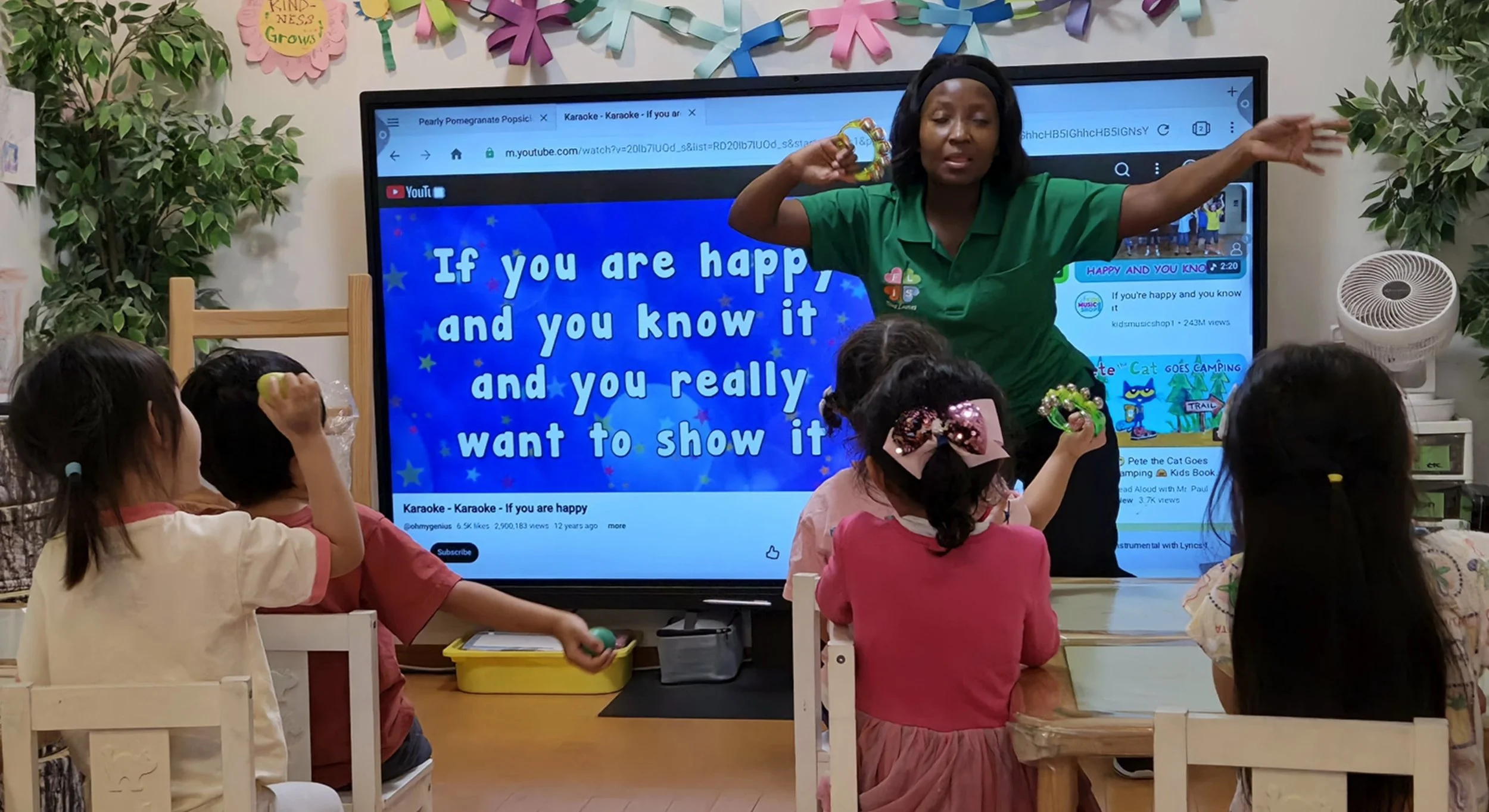
“Songs, movement and daily routines make English meaningful and memorable.”
Learning Through Repeated Context
One of the advantages of an English immersion environment is that children are exposed to the language across many different situations rather than during a single lesson. A word introduced during story time may appear again during a science activity, be repeated during lunch and later become part of a classroom conversation. Meeting the same vocabulary in different contexts helps children recognize language patterns, strengthen comprehension and develop confidence using English independently.
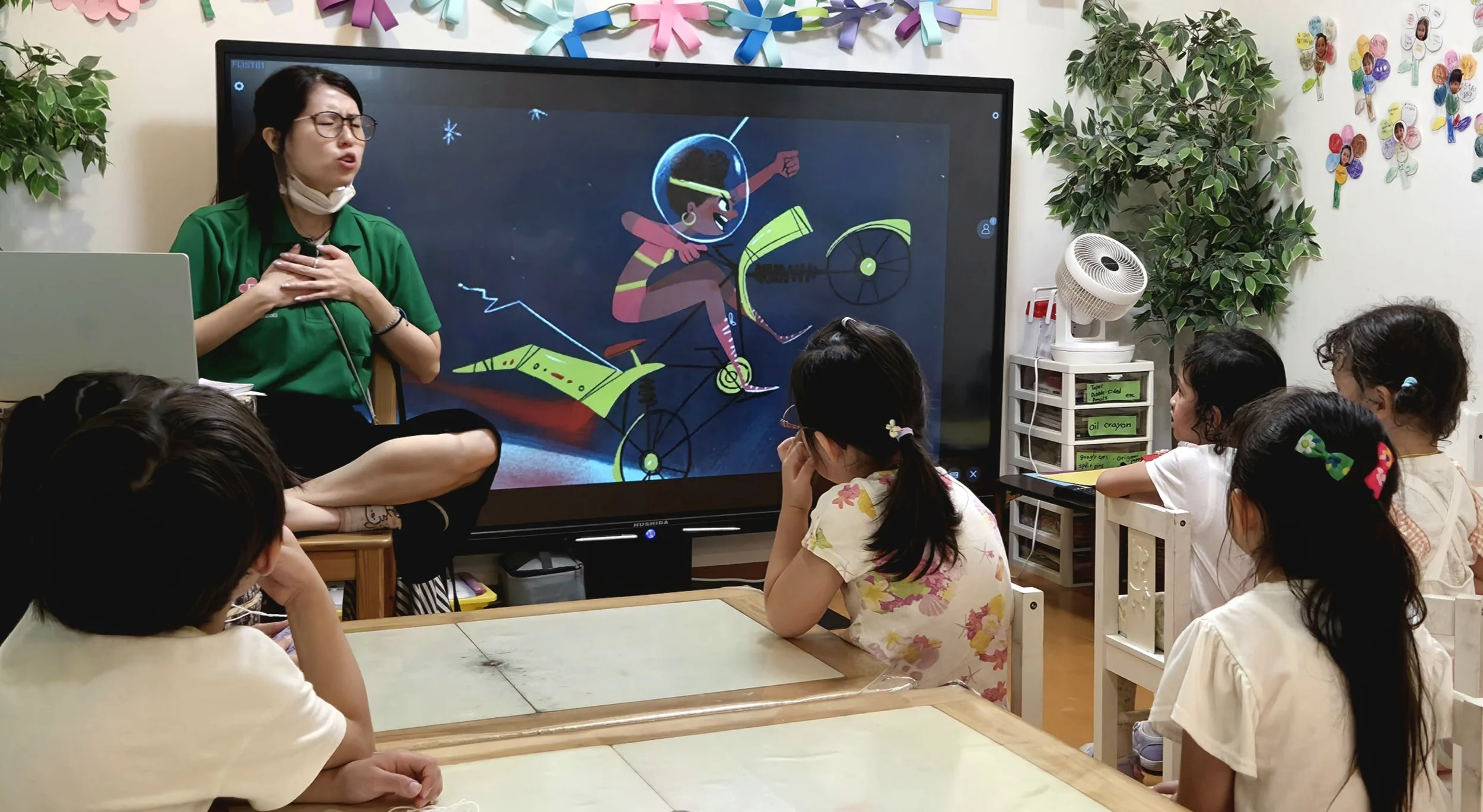
“Stories introduce new vocabulary through meaningful contexts.”
The "silent period" is a natural stage of language development. Many children spend weeks or even months listening carefully before they begin speaking regularly. During this time, children build understanding before feeling ready to communicate verbally. In a supportive environment, they are given the time and encouragement they need to begin using English naturally, without pressure.
At FLIST, English is not limited to scheduled lessons. It becomes part of the everyday experiences children share with teachers and classmates, allowing language to develop naturally through meaningful communication. By hearing, understanding and gradually using English throughout the day, children continue developing language skills that grow stronger with every new conversation.
